
Waking Up Sore? Start With Your Pillow

If you wake up with a stiff neck, an achy shoulder or a dull headache, your pillow is one of the first things to check. Most people choose one by squeezing it in a shop or going by price, then live with the result for years.
A pillow has one job: keep your head and neck in line with your spine while you sleep. What that looks like depends mostly on how you sleep. This guide covers each sleeping position, how to choose the right height and firmness, which materials are worth paying for, and how to tell when it’s time to replace your current pillow.
Quick answer:
| Sleeping position | Loft (height) | Firmness | Main goal |
|---|---|---|---|
| Side | Medium-high to high | Medium-firm to firm | Fill the gap between ear and shoulder |
| Back | Medium | Medium | Support the neck’s natural curve |
| Stomach | Low | Soft | Avoid tilting the head backward |
| Combination | Medium, adjustable | Medium | Work in more than one position |
What Makes a Pillow Suitable for Different Sleepers?
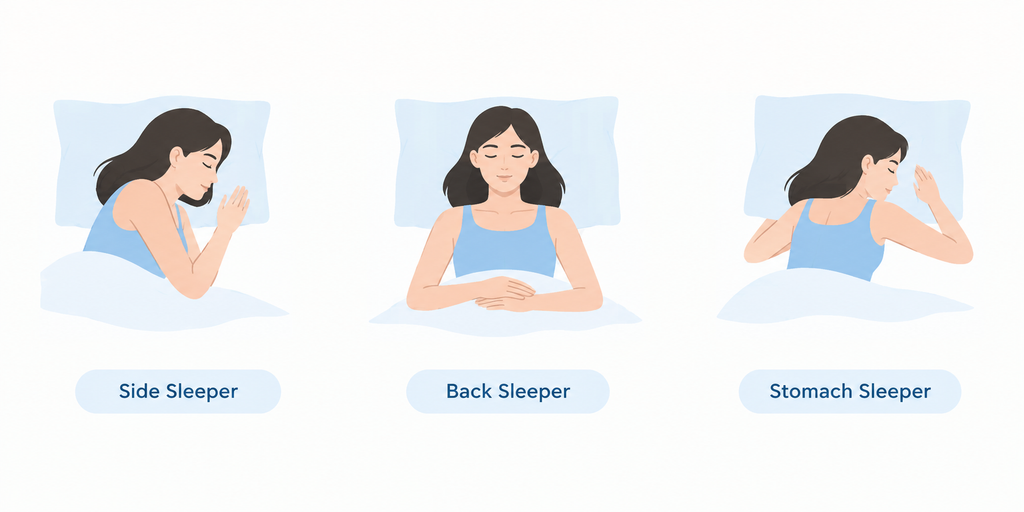
When you lie down, the gap between your head and the mattress changes with your position. A good pillow fills that gap so your neck stays neutral instead of bending up, down or sideways. Three things decide whether it does:
- Loft: how tall the pillow is under your head.
- Firmness: how much it resists as your head sinks in.
- Shape and material: whether it holds that support through the night and over the months.
Your body and mattress matter too. Broader shoulders leave a bigger gap to fill, so you need more loft. A soft mattress lets your shoulders sink and calls for a lower pillow, while a firm mattress usually needs a higher one. Heavier heads compress a pillow more, so they need something firmer.
This is why generic “best pillow” lists often disappoint. The right pillow depends on your position first, then your build and mattress.
Best Pillow for Side Sleepers
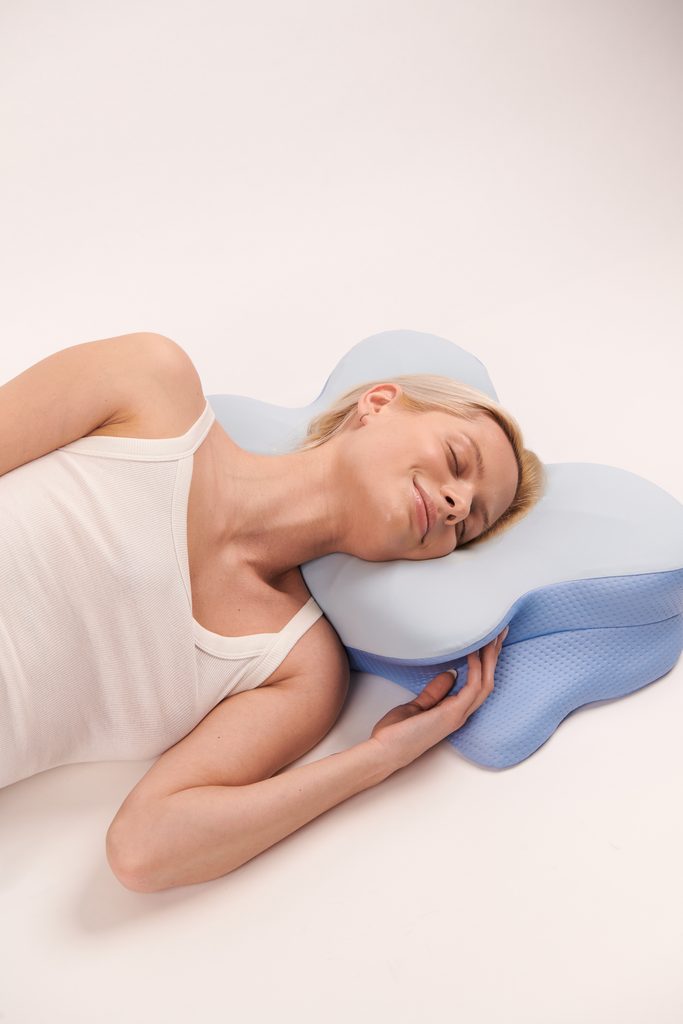
Side sleeping is the most common position, and it demands the most from a pillow. Your shoulder pushes your body away from the mattress, which creates a large space between your ear and the bed.
What to look for:
- Higher loft. The pillow should fill the whole gap so your head sits level rather than dropping toward the mattress.
- Medium-firm to firm support. A soft pillow collapses under the weight of your head and lets your neck bend downward.
- A contoured or gusseted shape. A raised edge under the neck and a shallow dip for the head help keep everything aligned.
- Room for your shoulder. Some contoured pillows include a shoulder cutout so your shoulder isn’t pushed up into your neck.
How to tell it’s working: look at a photo of yourself lying on your side. Your nose should line up roughly with the middle of your chest, with no tilt toward the mattress or the ceiling.
Buying tip: Broad-shouldered sleepers often
ften need noticeably more loft than petite ones, so ignore any product that claims a single height suits everyone. Also, if you like to hug your pillow, choose one that isn’t so tall it pushes your head up when you shift.
Best Pillow for Back Sleepers
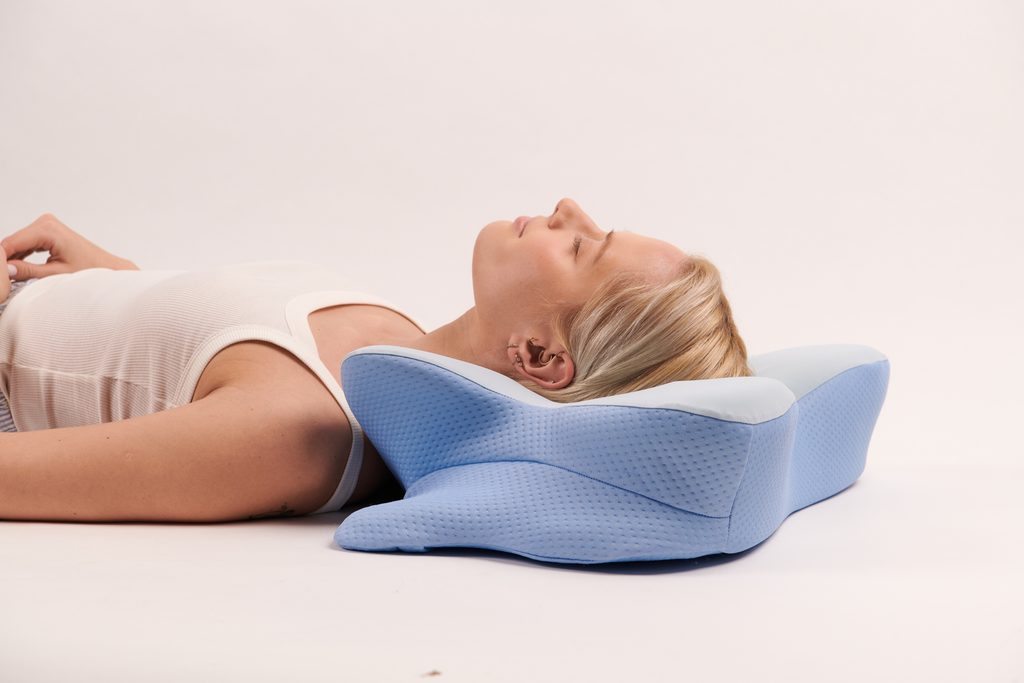
Back sleeping spreads your weight evenly, but your neck still has a natural curve that needs support. The gap here is smaller than for side sleepers, so the pillow shouldn’t be too tall. Too high, and your chin tucks toward your chest. Too flat, and your head tips back.
What to look for:
- Medium loft. Enough to cradle the neck without pushing your head forward.
- Medium firmness. Supportive but not hard.
- A cervical or contoured design. A slightly raised neck roll with a gentle hollow for the head helps maintain the curve of your neck.
- A stable material. Memory foam or latex holds its shape better than loose fills that shift as you settle.
Common mistake: Using a stack of pillows, or a puffy one meant for side sleeping. That pushes your head forward and can leave you with tension at the back of your neck.
If you’re a back sleeper who also rolls onto your side, the contoured designs discussed below are worth a look, because they’re built to support more than one position.
Best Pillow for Stomach Sleepers
Stomach sleeping is the hardest position on your neck, because you have to turn your head to one side to breathe. A thick pillow makes it worse by pushing your head up and arching your neck backward.
What to look for:
- Low loft. As flat as possible, ideally a thin pillow that keeps your head close to the mattress.
- Soft feel. The pillow should compress easily instead of propping your head up.
- Optional hip support. Placing a thin pillow under your pelvis can reduce the arch in your lower back.
Buying tip: Many stomach sleepers do best with a thin, soft pillow or, in some cases, no pillow under the head at all. If you’re waking up sore, it may be worth gradually training yourself toward side sleeping with a supportive pillow. Don’t force it, though. Changing position takes weeks, and comfort matters more than perfection.
Best Pillow for Combination Sleepers
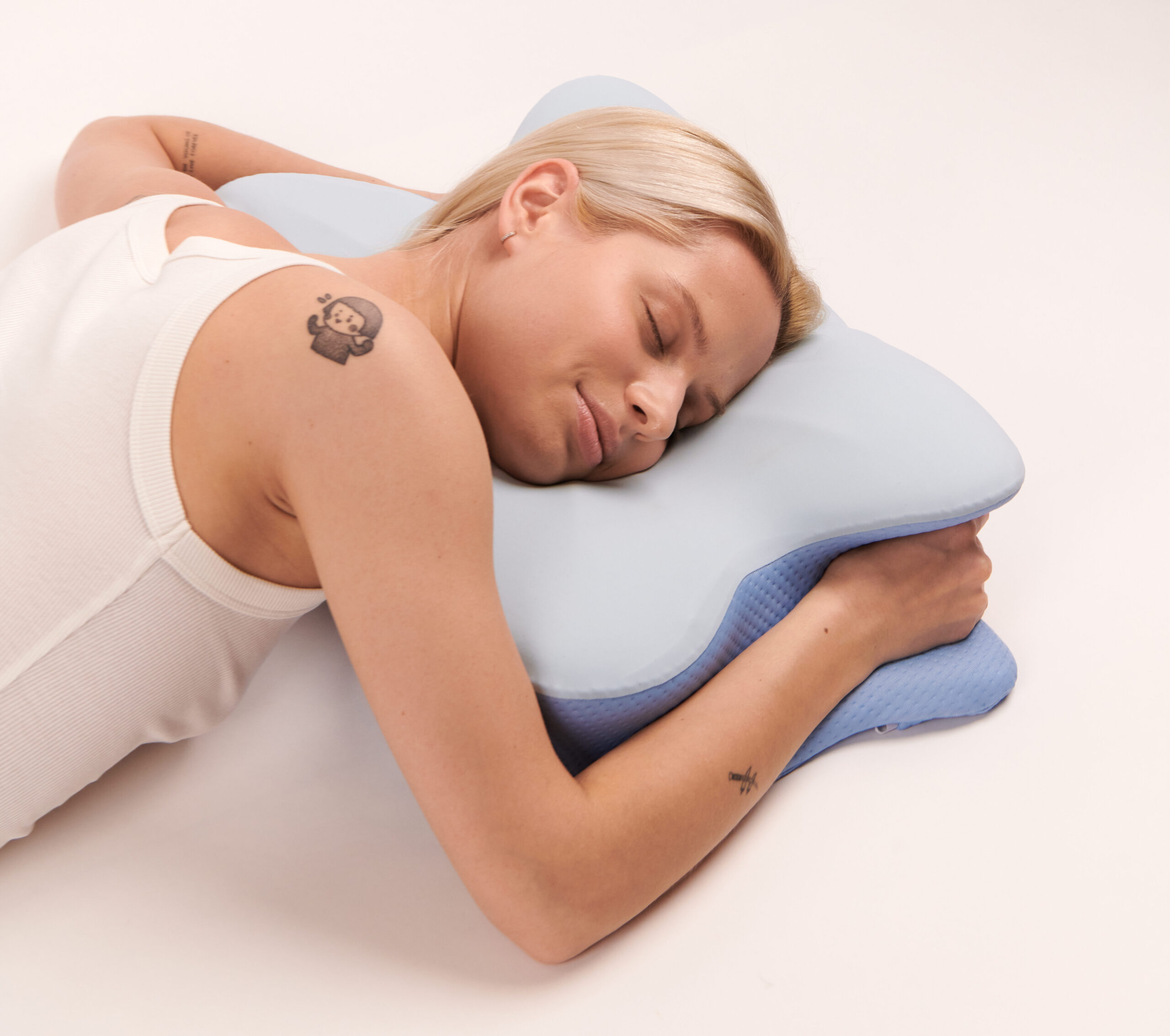
If you start on your back, roll onto your side and end up on your stomach, a pillow built for just one position will fail you for part of the night.
What to look for:
- Medium loft. Tall enough for side sleeping but not so tall it strains your neck on your back.
- Adjustable fill or removable layers. You can add or remove material until it suits your shoulders and mattress.
- A responsive material. Memory foam that recovers slowly can leave your head in a “dent” when you roll. Latex or shredded blends respond faster.
- A reversible contoured design. Different heights on each side let you flip the pillow depending on how you start the night.
Combination sleepers should prioritize versatility over extremes. A very high or very firm pillow will suit one position at the expense of the others.
How to Choose Pillow Height and Firmness
Loft and firmness are the two settings that matter most, and they work together.
Loft guide (compressed height):
- Low, under about 3 inches: stomach sleepers, smaller frames
- Medium, about 3 to 5 inches: back and combination sleepers
- High, about 4 to 6 inches or more: side sleepers, broader shoulders
Firmness guide:
- Soft: stomach sleepers, lighter heads
- Medium: back and combination sleepers
- Firm: side sleepers, heavier heads
The photo test: lie in your usual position and have someone take a photo from the side. Your neck should look like a straight extension of your spine, not bent up, down or sideways.
Watch your mattress: if you switch to a softer mattress, you may need a lower pillow, and the reverse for a firmer one. Also remember that these ranges are guidelines, not rules. If a slightly different height feels better and keeps you aligned, trust that.
Pillow Materials to Consider
Material affects support, temperature, durability and price.
- Memory foam: contours to your head and neck and holds its shape well. It can retain heat, so look for ventilated or gel-infused versions. Good for people who want consistent support.
- Latex: bouncy, durable and generally cooler than traditional foam. Heavier and often pricier. Good for combination sleepers and hot sleepers.
- Down and feather: soft and easy to scrunch, but it flattens over time and gives less structured support. May trigger allergies.
- Polyester fiberfill: cheap, washable and hypoallergenic, but it tends to flatten quickly and offers weaker neck support.
- Buckwheat and adjustable fills: highly customizable and breathable, but heavy and noisy.
Bottom line: if neck alignment is your priority, memory foam and latex are the most reliable choices. Down and polyester feel cozy, but they often lack structure.
Who Might Benefit From a Contoured Ergonomic Pillow?
A contoured pillow is designed with a raised neck support and a dip for the head, aiming to keep your neck aligned in more than one position. It may be worth considering if you:
- Wake up with neck or shoulder stiffness
- Switch between back and side sleeping
- Find that standard pillows flatten or go lumpy within months
- Spend long hours at a desk and want more supportive sleep
Contoured pillows aren’t for everyone. Stomach sleepers usually need something much flatter, and some people simply prefer a softer, fluffier feel.
If a contoured design sounds like what you’ve been looking for, we’ve put together a detailed review of the Derila ergonomic memory foam pillow, covering its design, who it suits and who should probably skip it.
👉 [Read our full Derila pillow review → YOUR REVIEW LINK]
How to Know Your Pillow Isn’t Suitable
Even a pillow that once suited you can stop doing its job. Signs it’s time for a change:
- You wake up with neck pain or stiffness that eases through the day
- You fold, bunch or stack the pillow to get comfortable
- Your shoulder feels pinched or numb when side sleeping
- You get headaches that seem linked to how you slept
- The pillow is flat, lumpy or discolored and no longer springs back
- You keep waking to readjust it
The fold test: fold a pillow in half. If it doesn’t spring back, it’s worn out. Most pillows last about one to three years, depending on the material and how well you care for them.
If you have persistent or severe pain, see a healthcare professional. A pillow can support good sleep posture, but it isn’t a treatment for medical conditions.
Frequently Asked Questions
What is the best pillow for neck pain?
There’s no single answer, but the best pillow is one that keeps your neck neutral in your usual sleeping position. For many people that means a contoured or medium-firm memory foam or latex design, with the right loft for their shoulders.
Is a firmer pillow better?
Not always. Firm suits side sleepers and heavier heads, while stomach sleepers usually need soft. Firmness should match your position and body.
How long does it take to adjust to a new pillow?
Give it one to two weeks, especially when the height or shape differs a lot from your old one. Check the return policy or trial period before you buy.
Is memory foam too hot for hot sleepers?
Traditional memory foam can trap heat, but ventilated, gel-infused and open-cell versions help. Latex is another cooler option.
Should I use two pillows?
Usually not. Stacking pillows makes height inconsistent and can push your neck out of line. A single pillow with the right loft is better.
How often should I replace my pillow?
Every one to three years, or sooner if it’s flat, lumpy or no longer supportive.
Final Thoughts: Choose for Your Position, Not the Price Tag
The right pillow isn’t the most expensive or the fluffiest. It’s the one that fits your sleeping position, keeps your spine aligned and holds up night after night. Start with your position, dial in loft and firmness, then choose a material that suits your comfort and budget.
If you want to explore a contoured option, read our honest breakdown before you buy:
👉 [See our Derila pillow review → YOUR REVIEW LINK]